Beyond the Prompt: AI alone won’t make your presentation stand out
December 2, 2025
/
3 min
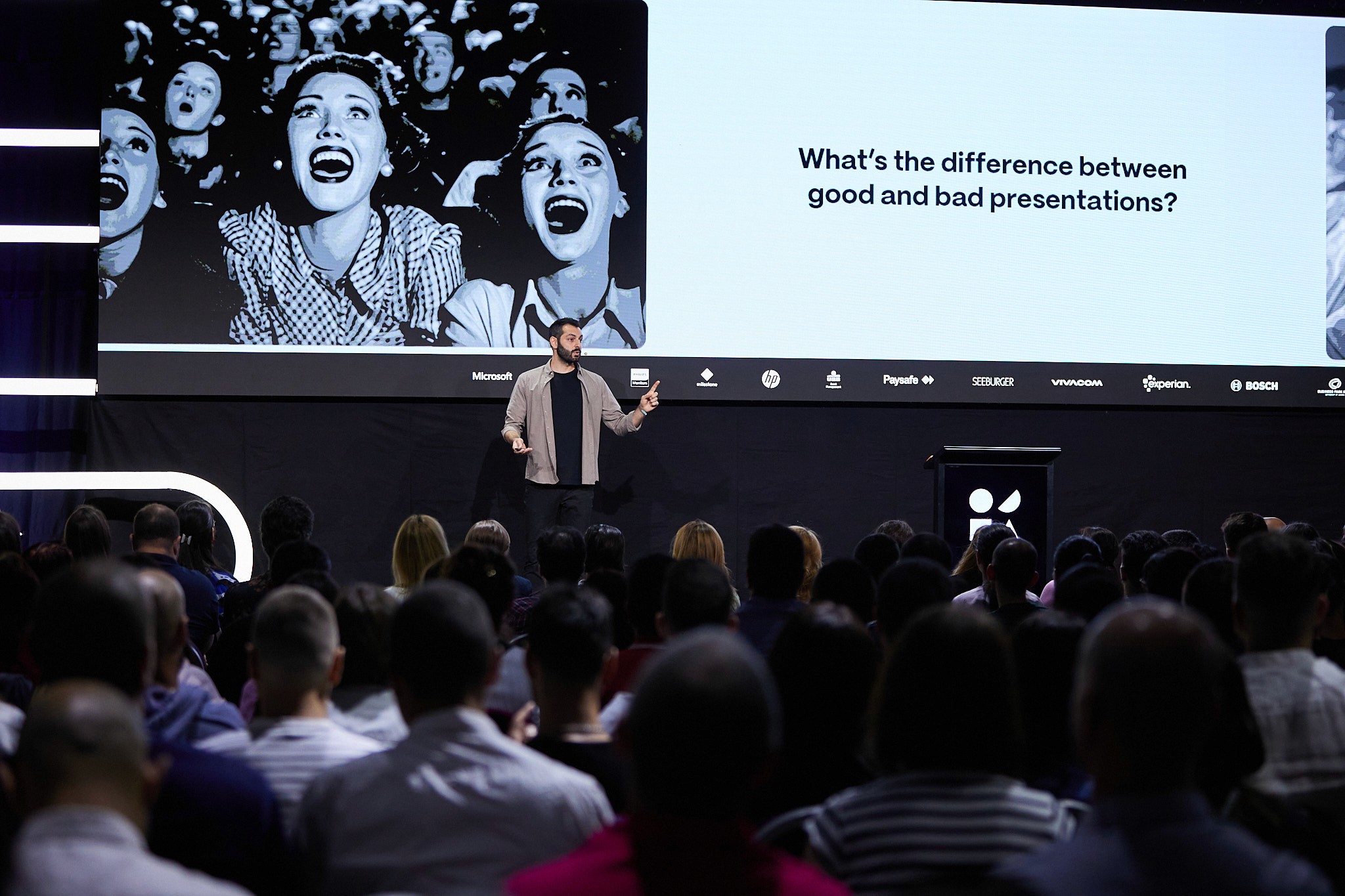

Below is a summary of a talk our founder Damon gave earlier this year. If you want to see the full talk, check it out below.
Every week a new AI tool appears promising “instant slides” or “auto-storytelling.” And sure, AI can generate a lot of things. But there’s one thing it can’t do for you.
It can’t make people care.
That’s the real competitive edge now. Not the prompt. Not the model. Not the speed. But your ability to connect. Your ability to craft meaning. Your ability to see what the audience actually needs.
Here are the three ideas shaping that future.
1. More AI means you need to sound more human
AI is flooding the world with content. Most of it sounds like robots trying to be human. Jargon everywhere. Zero tension. Zero feeling.
This is what happens when people let the AI write their story for them.
The fix isn’t “don’t use AI.”
The fix is use AI as a collaborator, not a ghostwriter.
Ask it better questions. Push it to mimic real human speech. Use prompts like:
“How would a frustrated CEO explain this in a meeting?”
“What’s the emotional angle my audience would actually care about?”
Then refine it and shape it with your experience. In your own voice.
2. AX first, AI second
Everybody talks about UX when it comes to their websites and products. We forget presentations have their own version of that. Audience Experience. AX.
And this is what most AI tools get wrong. Almost all of them focused on speed. Faster slides. Faster images. Faster stories.
Speed is great for notes, emails, drafts. But important presentations need depth. Nuance. Design decisions. Emotional weight. You can't produce a great sales deck fast. Or a great investor deck. Or a great keynote talk. These things take time to get right.
AI doesn’t know when an image is generic. It doesn’t know when a slide is forgettable. It doesn’t know when your audience is bored.
That’s your job.
When we build pitch decks, we use AI to explore ideas, not to finish them. We use it to create visuals you can’t find on stock websites. We use it to test creative directions that would take hours manually.
The goal isn’t automation. The goal is elevation.
Better visuals. More emotion. A sharper experience.
AI is a lever. AX is the destination.
3. Curiosity is the real skill now
"What prompts did you use?"
This is what everyone asks for. Just look at the comments whenever someone posts something AI generated. As if the prompt replaces judgement, taste, skill.
If you’re great at your work, AI becomes an amplifier. Designers who understand composition create better AI images. Photographers who understand light generate better shots. Writers with copywriting skills get better outputs. It's as simple as that.
The people who play, who explore, who push these tools beyond the default… those are the ones who will stand out.
The takeaway
AI will change how we create presentations. It already is. But it won’t replace the thing that actually moves people.
That requires your judgement. Your curiosity. Your ability to create a moment worth remembering. The best presentations will always have AI in the workflow, but a human in the driver seat.
Because in the end, the story that wins will always be human.
Below is a summary of a talk our founder Damon gave earlier this year. If you want to see the full talk, check it out below.
Every week a new AI tool appears promising “instant slides” or “auto-storytelling.” And sure, AI can generate a lot of things. But there’s one thing it can’t do for you.
It can’t make people care.
That’s the real competitive edge now. Not the prompt. Not the model. Not the speed. But your ability to connect. Your ability to craft meaning. Your ability to see what the audience actually needs.
Here are the three ideas shaping that future.
1. More AI means you need to sound more human
AI is flooding the world with content. Most of it sounds like robots trying to be human. Jargon everywhere. Zero tension. Zero feeling.
This is what happens when people let the AI write their story for them.
The fix isn’t “don’t use AI.”
The fix is use AI as a collaborator, not a ghostwriter.
Ask it better questions. Push it to mimic real human speech. Use prompts like:
“How would a frustrated CEO explain this in a meeting?”
“What’s the emotional angle my audience would actually care about?”
Then refine it and shape it with your experience. In your own voice.
2. AX first, AI second
Everybody talks about UX when it comes to their websites and products. We forget presentations have their own version of that. Audience Experience. AX.
And this is what most AI tools get wrong. Almost all of them focused on speed. Faster slides. Faster images. Faster stories.
Speed is great for notes, emails, drafts. But important presentations need depth. Nuance. Design decisions. Emotional weight. You can't produce a great sales deck fast. Or a great investor deck. Or a great keynote talk. These things take time to get right.
AI doesn’t know when an image is generic. It doesn’t know when a slide is forgettable. It doesn’t know when your audience is bored.
That’s your job.
When we build pitch decks, we use AI to explore ideas, not to finish them. We use it to create visuals you can’t find on stock websites. We use it to test creative directions that would take hours manually.
The goal isn’t automation. The goal is elevation.
Better visuals. More emotion. A sharper experience.
AI is a lever. AX is the destination.
3. Curiosity is the real skill now
"What prompts did you use?"
This is what everyone asks for. Just look at the comments whenever someone posts something AI generated. As if the prompt replaces judgement, taste, skill.
If you’re great at your work, AI becomes an amplifier. Designers who understand composition create better AI images. Photographers who understand light generate better shots. Writers with copywriting skills get better outputs. It's as simple as that.
The people who play, who explore, who push these tools beyond the default… those are the ones who will stand out.
The takeaway
AI will change how we create presentations. It already is. But it won’t replace the thing that actually moves people.
That requires your judgement. Your curiosity. Your ability to create a moment worth remembering. The best presentations will always have AI in the workflow, but a human in the driver seat.
Because in the end, the story that wins will always be human.
Below is a summary of a talk our founder Damon gave earlier this year. If you want to see the full talk, check it out below.
Every week a new AI tool appears promising “instant slides” or “auto-storytelling.” And sure, AI can generate a lot of things. But there’s one thing it can’t do for you.
It can’t make people care.
That’s the real competitive edge now. Not the prompt. Not the model. Not the speed. But your ability to connect. Your ability to craft meaning. Your ability to see what the audience actually needs.
Here are the three ideas shaping that future.
1. More AI means you need to sound more human
AI is flooding the world with content. Most of it sounds like robots trying to be human. Jargon everywhere. Zero tension. Zero feeling.
This is what happens when people let the AI write their story for them.
The fix isn’t “don’t use AI.”
The fix is use AI as a collaborator, not a ghostwriter.
Ask it better questions. Push it to mimic real human speech. Use prompts like:
“How would a frustrated CEO explain this in a meeting?”
“What’s the emotional angle my audience would actually care about?”
Then refine it and shape it with your experience. In your own voice.
2. AX first, AI second
Everybody talks about UX when it comes to their websites and products. We forget presentations have their own version of that. Audience Experience. AX.
And this is what most AI tools get wrong. Almost all of them focused on speed. Faster slides. Faster images. Faster stories.
Speed is great for notes, emails, drafts. But important presentations need depth. Nuance. Design decisions. Emotional weight. You can't produce a great sales deck fast. Or a great investor deck. Or a great keynote talk. These things take time to get right.
AI doesn’t know when an image is generic. It doesn’t know when a slide is forgettable. It doesn’t know when your audience is bored.
That’s your job.
When we build pitch decks, we use AI to explore ideas, not to finish them. We use it to create visuals you can’t find on stock websites. We use it to test creative directions that would take hours manually.
The goal isn’t automation. The goal is elevation.
Better visuals. More emotion. A sharper experience.
AI is a lever. AX is the destination.
3. Curiosity is the real skill now
"What prompts did you use?"
This is what everyone asks for. Just look at the comments whenever someone posts something AI generated. As if the prompt replaces judgement, taste, skill.
If you’re great at your work, AI becomes an amplifier. Designers who understand composition create better AI images. Photographers who understand light generate better shots. Writers with copywriting skills get better outputs. It's as simple as that.
The people who play, who explore, who push these tools beyond the default… those are the ones who will stand out.
The takeaway
AI will change how we create presentations. It already is. But it won’t replace the thing that actually moves people.
That requires your judgement. Your curiosity. Your ability to create a moment worth remembering. The best presentations will always have AI in the workflow, but a human in the driver seat.
Because in the end, the story that wins will always be human.
Below is a summary of a talk our founder Damon gave earlier this year. If you want to see the full talk, check it out below.
Every week a new AI tool appears promising “instant slides” or “auto-storytelling.” And sure, AI can generate a lot of things. But there’s one thing it can’t do for you.
It can’t make people care.
That’s the real competitive edge now. Not the prompt. Not the model. Not the speed. But your ability to connect. Your ability to craft meaning. Your ability to see what the audience actually needs.
Here are the three ideas shaping that future.
1. More AI means you need to sound more human
AI is flooding the world with content. Most of it sounds like robots trying to be human. Jargon everywhere. Zero tension. Zero feeling.
This is what happens when people let the AI write their story for them.
The fix isn’t “don’t use AI.”
The fix is use AI as a collaborator, not a ghostwriter.
Ask it better questions. Push it to mimic real human speech. Use prompts like:
“How would a frustrated CEO explain this in a meeting?”
“What’s the emotional angle my audience would actually care about?”
Then refine it and shape it with your experience. In your own voice.
2. AX first, AI second
Everybody talks about UX when it comes to their websites and products. We forget presentations have their own version of that. Audience Experience. AX.
And this is what most AI tools get wrong. Almost all of them focused on speed. Faster slides. Faster images. Faster stories.
Speed is great for notes, emails, drafts. But important presentations need depth. Nuance. Design decisions. Emotional weight. You can't produce a great sales deck fast. Or a great investor deck. Or a great keynote talk. These things take time to get right.
AI doesn’t know when an image is generic. It doesn’t know when a slide is forgettable. It doesn’t know when your audience is bored.
That’s your job.
When we build pitch decks, we use AI to explore ideas, not to finish them. We use it to create visuals you can’t find on stock websites. We use it to test creative directions that would take hours manually.
The goal isn’t automation. The goal is elevation.
Better visuals. More emotion. A sharper experience.
AI is a lever. AX is the destination.
3. Curiosity is the real skill now
"What prompts did you use?"
This is what everyone asks for. Just look at the comments whenever someone posts something AI generated. As if the prompt replaces judgement, taste, skill.
If you’re great at your work, AI becomes an amplifier. Designers who understand composition create better AI images. Photographers who understand light generate better shots. Writers with copywriting skills get better outputs. It's as simple as that.
The people who play, who explore, who push these tools beyond the default… those are the ones who will stand out.
The takeaway
AI will change how we create presentations. It already is. But it won’t replace the thing that actually moves people.
That requires your judgement. Your curiosity. Your ability to create a moment worth remembering. The best presentations will always have AI in the workflow, but a human in the driver seat.
Because in the end, the story that wins will always be human.
Below is a summary of a talk our founder Damon gave earlier this year. If you want to see the full talk, check it out below.
Every week a new AI tool appears promising “instant slides” or “auto-storytelling.” And sure, AI can generate a lot of things. But there’s one thing it can’t do for you.
It can’t make people care.
That’s the real competitive edge now. Not the prompt. Not the model. Not the speed. But your ability to connect. Your ability to craft meaning. Your ability to see what the audience actually needs.
Here are the three ideas shaping that future.
1. More AI means you need to sound more human
AI is flooding the world with content. Most of it sounds like robots trying to be human. Jargon everywhere. Zero tension. Zero feeling.
This is what happens when people let the AI write their story for them.
The fix isn’t “don’t use AI.”
The fix is use AI as a collaborator, not a ghostwriter.
Ask it better questions. Push it to mimic real human speech. Use prompts like:
“How would a frustrated CEO explain this in a meeting?”
“What’s the emotional angle my audience would actually care about?”
Then refine it and shape it with your experience. In your own voice.
2. AX first, AI second
Everybody talks about UX when it comes to their websites and products. We forget presentations have their own version of that. Audience Experience. AX.
And this is what most AI tools get wrong. Almost all of them focused on speed. Faster slides. Faster images. Faster stories.
Speed is great for notes, emails, drafts. But important presentations need depth. Nuance. Design decisions. Emotional weight. You can't produce a great sales deck fast. Or a great investor deck. Or a great keynote talk. These things take time to get right.
AI doesn’t know when an image is generic. It doesn’t know when a slide is forgettable. It doesn’t know when your audience is bored.
That’s your job.
When we build pitch decks, we use AI to explore ideas, not to finish them. We use it to create visuals you can’t find on stock websites. We use it to test creative directions that would take hours manually.
The goal isn’t automation. The goal is elevation.
Better visuals. More emotion. A sharper experience.
AI is a lever. AX is the destination.
3. Curiosity is the real skill now
"What prompts did you use?"
This is what everyone asks for. Just look at the comments whenever someone posts something AI generated. As if the prompt replaces judgement, taste, skill.
If you’re great at your work, AI becomes an amplifier. Designers who understand composition create better AI images. Photographers who understand light generate better shots. Writers with copywriting skills get better outputs. It's as simple as that.
The people who play, who explore, who push these tools beyond the default… those are the ones who will stand out.
The takeaway
AI will change how we create presentations. It already is. But it won’t replace the thing that actually moves people.
That requires your judgement. Your curiosity. Your ability to create a moment worth remembering. The best presentations will always have AI in the workflow, but a human in the driver seat.
Because in the end, the story that wins will always be human.
Below is a summary of a talk our founder Damon gave earlier this year. If you want to see the full talk, check it out below.
Every week a new AI tool appears promising “instant slides” or “auto-storytelling.” And sure, AI can generate a lot of things. But there’s one thing it can’t do for you.
It can’t make people care.
That’s the real competitive edge now. Not the prompt. Not the model. Not the speed. But your ability to connect. Your ability to craft meaning. Your ability to see what the audience actually needs.
Here are the three ideas shaping that future.
1. More AI means you need to sound more human
AI is flooding the world with content. Most of it sounds like robots trying to be human. Jargon everywhere. Zero tension. Zero feeling.
This is what happens when people let the AI write their story for them.
The fix isn’t “don’t use AI.”
The fix is use AI as a collaborator, not a ghostwriter.
Ask it better questions. Push it to mimic real human speech. Use prompts like:
“How would a frustrated CEO explain this in a meeting?”
“What’s the emotional angle my audience would actually care about?”
Then refine it and shape it with your experience. In your own voice.
2. AX first, AI second
Everybody talks about UX when it comes to their websites and products. We forget presentations have their own version of that. Audience Experience. AX.
And this is what most AI tools get wrong. Almost all of them focused on speed. Faster slides. Faster images. Faster stories.
Speed is great for notes, emails, drafts. But important presentations need depth. Nuance. Design decisions. Emotional weight. You can't produce a great sales deck fast. Or a great investor deck. Or a great keynote talk. These things take time to get right.
AI doesn’t know when an image is generic. It doesn’t know when a slide is forgettable. It doesn’t know when your audience is bored.
That’s your job.
When we build pitch decks, we use AI to explore ideas, not to finish them. We use it to create visuals you can’t find on stock websites. We use it to test creative directions that would take hours manually.
The goal isn’t automation. The goal is elevation.
Better visuals. More emotion. A sharper experience.
AI is a lever. AX is the destination.
3. Curiosity is the real skill now
"What prompts did you use?"
This is what everyone asks for. Just look at the comments whenever someone posts something AI generated. As if the prompt replaces judgement, taste, skill.
If you’re great at your work, AI becomes an amplifier. Designers who understand composition create better AI images. Photographers who understand light generate better shots. Writers with copywriting skills get better outputs. It's as simple as that.
The people who play, who explore, who push these tools beyond the default… those are the ones who will stand out.
The takeaway
AI will change how we create presentations. It already is. But it won’t replace the thing that actually moves people.
That requires your judgement. Your curiosity. Your ability to create a moment worth remembering. The best presentations will always have AI in the workflow, but a human in the driver seat.
Because in the end, the story that wins will always be human.


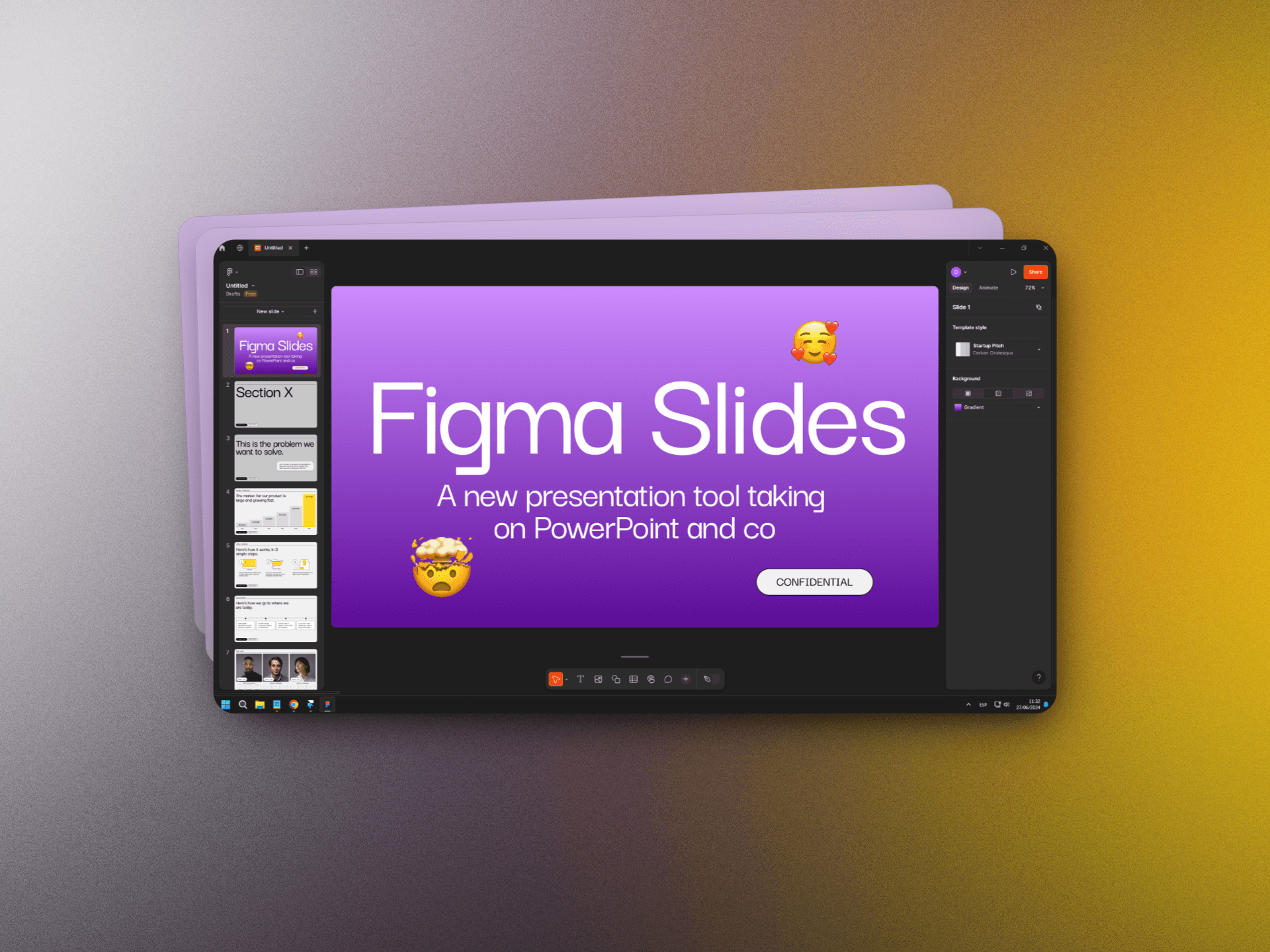
Figma Slides: A new presentation tool taking on PowerPoint and co
Presentation tools
Presentation tools
Presentation tools
Presentation tools
Presentation tools


Our client Delphina raises $7.5M in seed funding
Customer stories
Customer stories
Customer stories
Customer stories
Customer stories